
The Material
Old in Europe. New to most in the United States.
Microcement is a cement-based coating applied by hand in layers totaling roughly 3mm thick. It has been used across Europe for decades. Here it is still unfamiliar to most homeowners, and to plenty of builders.
Because it is thin and bonds to what is already there, it works over tile, concrete, plywood, drywall and existing countertops. In most rooms nothing is torn out. The floor height barely changes, so doors and appliances still fit.
The result is a single continuous surface with no grout lines, no tile edges and no transition strips. In a shower that means the pan, the curb and the walls read as one piece.
How It Goes On
Six coats, in three stages.
Cure time between coats is the part that cannot be rushed. The finish may vary by job.
Clean
The existing surface is cleaned and prepared.
Two coats of base
The base build-up goes on by hand, with cure time between coats.
Two coats of color
The color coats are troweled on and worked to the finish you chose.
Two coats of finish
Finish coats seal the surface. The finish may vary by job.
Remodel
Over what is already there.
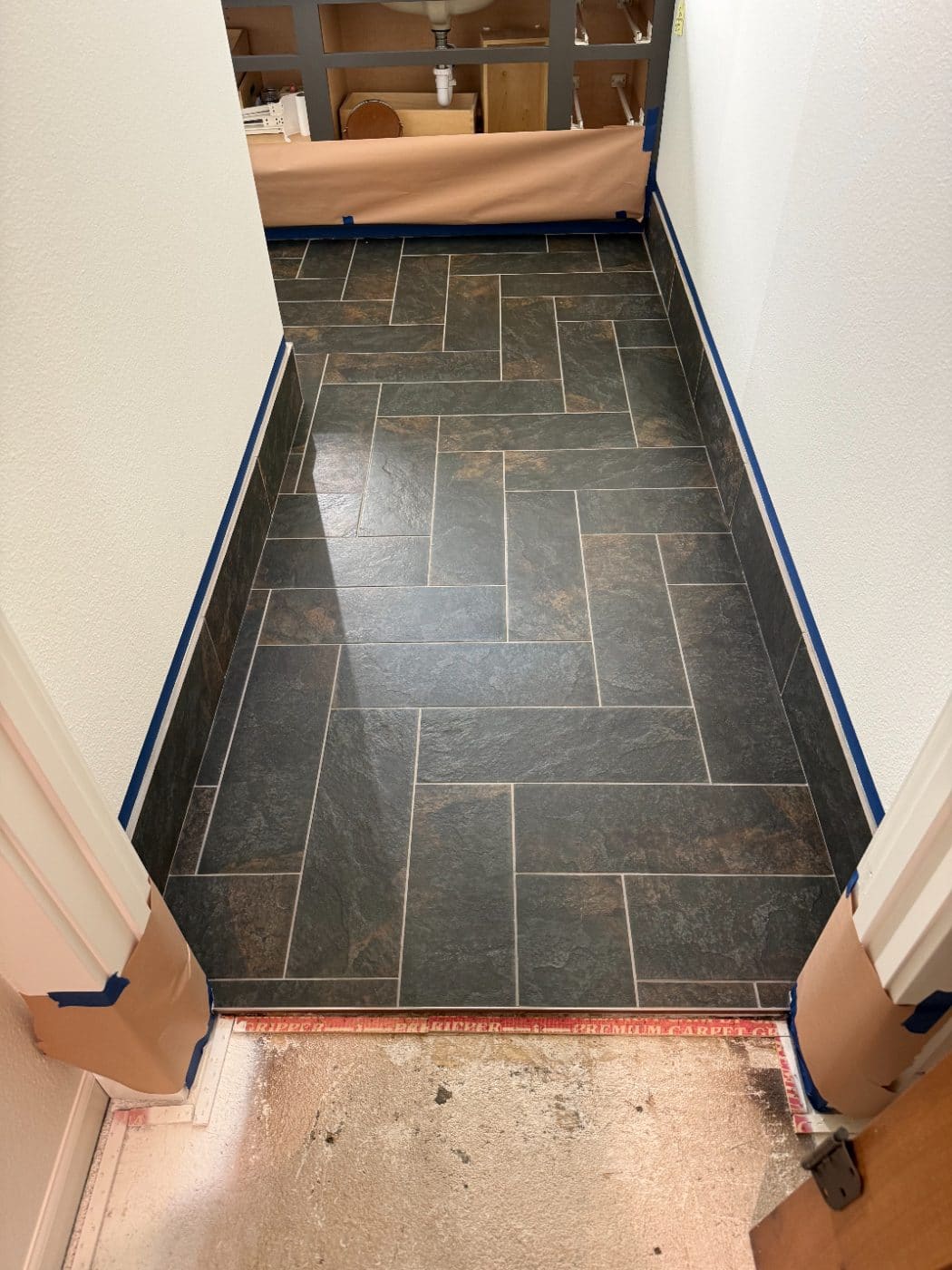
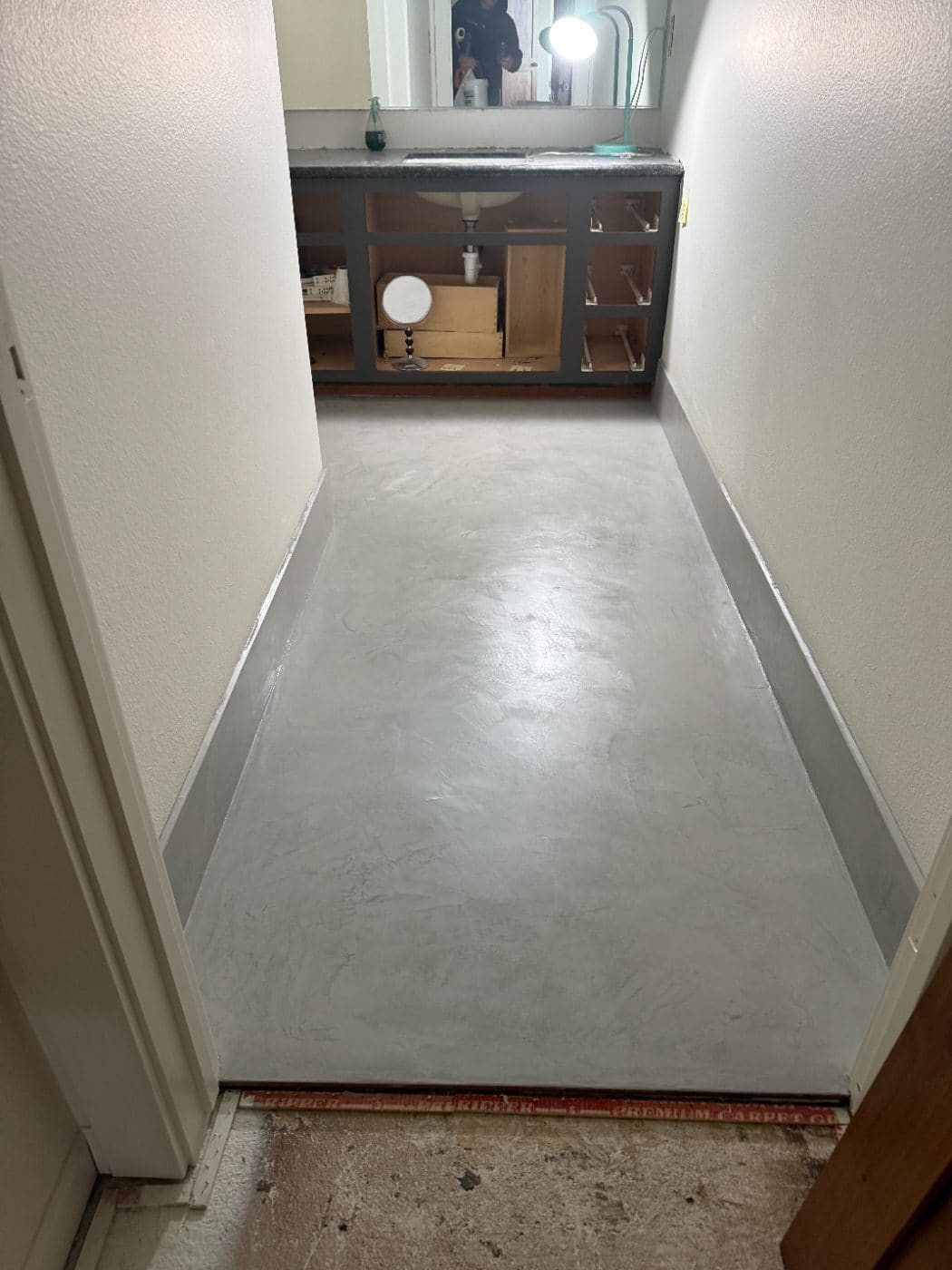
The dark slate-look tile in this powder room stayed in place. The floor was prepared, coated and sealed in the same room, at the same camera position.
Common Questions
Answers before you call.
Can it go over my existing tile?
In most cases yes. The tile is cleaned and prepared, then coated. This is the usual approach in a remodel and it avoids demolition.
What waterproofing is required in wet areas?
Wet areas are waterproofed as part of the build-up, as a distinct layer under the decorative microcement finish, and the finished surface is sealed. The microcement finish itself is not the waterproofing membrane — the assembly underneath it is.
How thick is it?
Roughly 3mm. Thin enough that floor heights, door clearances and appliance openings usually stay as they are.
How do I choose a color?
Book an appointment at the Spokane Valley shop and see the Topcret range in person. Screens do not show the texture.
Does it crack?
The system is applied over a prepared, stable substrate with a reinforcing layer in the build-up. Substrate preparation is where cracking is prevented, which is why we spend time on it.
Researching the material? Topcret develops and manufactures the system in Spain. Their technical library is worth reading.
By Appointment
See and feel the finishes before you decide.
Bring your plans or your photos to the Spokane Valley shop. We will walk the Topcret range with you and scope the job.